- Home
- About Us
-
Products
- National Zero Till Seed Cum
Ferti Drill - National Zero Till Happy Seeder
- National Zero Till Multi Crop
Planter for 2 Wheel Tractor
(Direct Hitch/Power Tiller) - National Direct Seeder for
Rice (Multi Crop) - National Seed Cum Fertilizer Drill
- National Multi Crop Planter
- National Multi Crop Planter for
Mini Power Tiller - National Multi Crop Ridge Planter
- National Raised Bed Planter
- National Pneumatic Planter
- National Fertilizer Spreader
- National Vegitable Nursery
Transplanter - National Axil Flow Vegetable
Seed Extractor - National Grond Nut Digger
- National Post Hole Digger
- National Maize Sheller
No-Tillage Equipment
Tillage Equipment
Ridge Planter Equipment
Bed Planter Equipment
Precision Planter Equipment
Fertilizer & Nursery Equipment
Specialized Seed Extractors
& Vegetable Equipme
Urea Deep Placement
- National Zero Till Seed Cum
- Blogs
- Awards
- Career
- Gallery
Contact Us
Become a Dealer
Become a Vendor
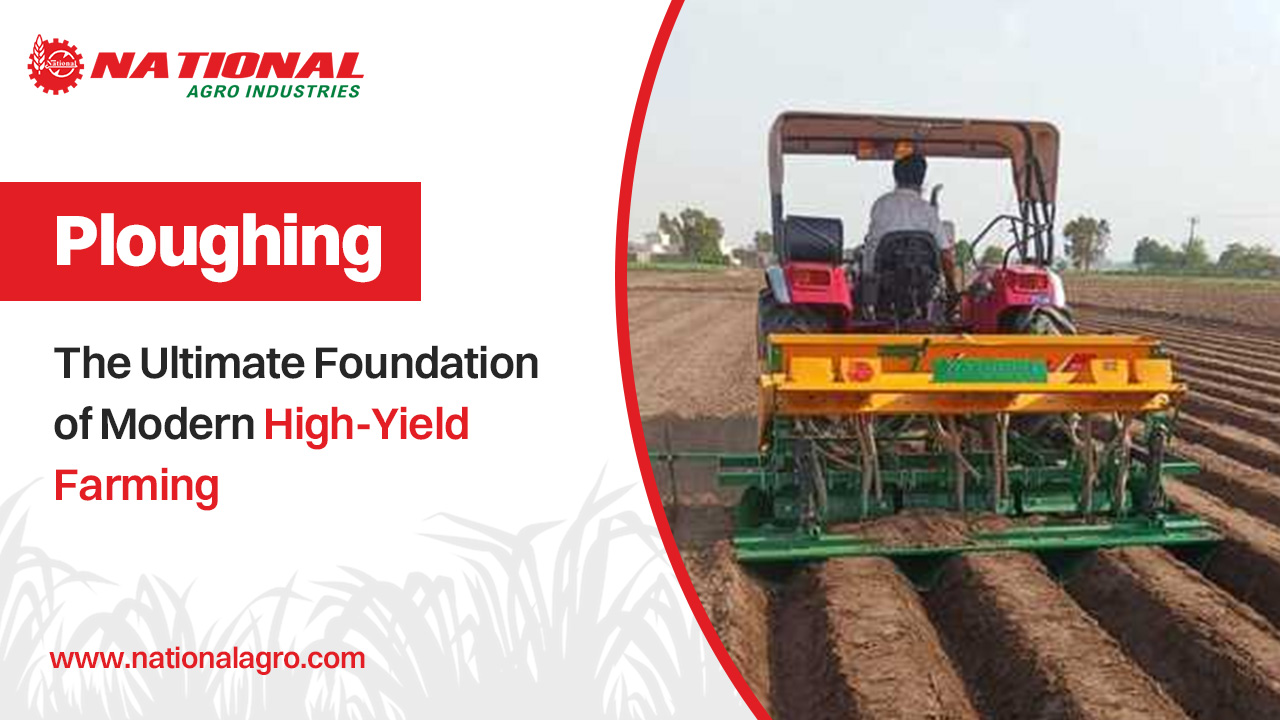
Ploughing: The Ultimate Foundation of Modern High-Yield Farming
21, March, 2026
Ploughing: The Ultimate Foundation of Modern High-Yield Farming
In the high-stakes world of global agriculture, the difference between a mediocre harvest and a record-breaking yield often lies beneath the surface.
While modern talk centers on hybrid seeds and automated drones, the ancient practice of ploughing remains the most critical mechanical intervention in the crop cycle.
We believe that understanding what is ploughing goes beyond just "turning the dirt." It is a sophisticated biological and mechanical process that resets the soil's clock, optimizes nutrient availability, and creates a fortified environment for the next generation of crops.
In this definitive guide, we explore why ploughing techniques are the backbone of food security and how choosing the right agricultural machinery can revolutionize your farm’s productivity.
What is Ploughing? Decoding the First Step of Tillage
To the untrained eye, a tractor pulling a plough through a field looks simple. In reality, it is a complex engineering feat. Ploughing, often referred to as primary tillage, is the process of loosening, turning, and aerating the soil to a specific depth (typically 6 to 12 inches).
The primary goal is simple: Seedbed preparation. However, the secondary effects of burying weed seeds, incorporating organic matter, and breaking up the "plough pan" (hardened subsoil) are what truly determine long-term land health.
The Evolution of the Plough
From the wooden "ard" used by ancient civilizations to the high-carbon steel mouldboard ploughs of today, the tool has evolved, but the mission remains the same. Modern National Agro implements are now designed with precision geometry to reduce tractor fuel consumption while maximizing "shattering" (the breaking up of soil clods).
Why Ploughing is Integral in Modern Agriculture (2025-2026 Trends)
As we move into a new era of "Climate-Smart Agriculture," the role of the plough is being redefined. It is no longer just about brute force; it is about strategic soil management.
1. Advanced Soil and Seedbed Preparation
Hard, compacted soil is the enemy of root development. When soil is turned using a tractor-mounted plough, it transitions from a dense block to a "crumbly" texture.
- Oxygenation: Roots require oxygen for respiration. Aerated soil ensures that air reaches the root zone.
- Water Infiltration: Ploughed soil acts like a sponge, absorbing rainfall rather than letting it run off, which is essential for drought-prone regions.
2. Intelligent Weed Management
The rise of herbicide-resistant "superweeds" has made mechanical weed management more important than ever. By utilizing mouldboard ploughing, farmers can invert the soil, burying weed seeds so deep that they cannot germinate.
This reduces the reliance on expensive chemical sprays and promotes a cleaner, organic-friendly growing environment.
3. Nutrient Cycling and Organic Matter Incorporation
Crop residue from the previous season (stubble) is rich in carbon. If left on the surface, it decomposes slowly. Ploughing incorporates this residue into the "active" layer of the soil, where microorganisms can break it down into humus. This process essentially "charges" the soil with natural fertilizer.
4. Natural Pest and Disease Control
Soil-borne pests like grubs, wireworms, and various fungal spores often hibernate just below the surface. The mechanical action of ploughing exposes these organisms to the sun’s UV rays and natural predators (like birds), significantly reducing pest pressure for the coming season without chemical intervention.
5. Breaking the Hardpan
Frequent tractor traffic can create a "hardpan" a compressed layer of soil that roots cannot penetrate. Specialized tools like the chisel plough or subsoiler are designed to reach these deep layers, shattering the pan and allowing deep-taproot crops to reach groundwater.
A Deep Dive into Modern Ploughing Techniques
Not every field is created equal. At National Agro, we offer a range of tools tailored to specific ploughing techniques. Understanding these methods is the first step in optimizing your ROI.
Mouldboard Ploughing: The "Gold Standard" of Inversion
This is the most aggressive form of tillage. The mouldboard plough features a curved blade that lifts and completely flips the soil.
- Best for: Heavy clay soils, fields with high weed density, and burying thick crop residue.
- Pro Tip: This technique is ideal for primary tillage in the autumn to allow frost to break up the turned clods over winter.
Disc Ploughing: The Hard Ground Specialist
Unlike the mouldboard, the disc plough uses large, rotating steel discs.
- Best for: Rocky, stony, or extremely dry and hard ground. Because the discs rotate, they roll over obstacles that would break a traditional ploughshare.
- National Agro Edge: Our disc blades are made from wear-resistant boron steel, ensuring longevity in the harshest terrains.
Chisel Ploughing
The chisel plough does not invert the soil. Instead, it uses narrow tines to "scarify" and loosen the ground.
- Best for: Preventing soil erosion. It leaves about 30-50% of crop residue on the surface, which protects the topsoil from wind and water.
- Why use it? It is faster and requires less horsepower than full inversion ploughing.
Rotary Tilling (Rotavator)
A rotary tiller uses rotating L-shaped blades to pulverize the soil into a fine tilth.
- Best for: Preparing a smooth seedbed for small-seed crops like vegetables or rice.
- Benefit: It combines primary and secondary tillage into a single pass, saving time and fuel.
Contour and Round-and-Round Ploughing
For farmers working on slopes, contour ploughing (following the natural curves of the land) is essential. It creates mini-terraces that trap water and prevent topsoil from washing away. Similarly, round and round ploughing (starting from the perimeter and working inward) reduces the number of "dead furrows" in the field.
Essential Agricultural Tools
Choosing the right equipment is a capital investment in your farm’s future. Here is a breakdown of the industry-leading tools manufactured by National Agro Industries.
|
Tool Name |
Primary Function |
Best Soil Type |
|
Mouldboard Plough |
Soil Inversion & Residue Burial |
Clay, Loam, Soft Soils |
|
Disc Plough |
Cutting through Obstacles |
Rocky, Stony, Hard Ground |
|
Chisel Plough |
Deep Loosening (No Inversion) |
All (Great for Erosion Control) |
|
Reversible Plough |
Uniform Tillage (Two-Way) |
Large Flat Plains, Hilly Areas |
|
Rotary Tiller |
Pulverizing & Finishing |
Seedbed Preparation |
|
Subsoiler |
Breaking Deep Hardpan |
Compacted Subsoils |
Spotlight: The Hydraulic Reversible Plough
The Hydraulic Reversible Plough is a game-changer for large-scale operations. Unlike traditional ploughs that only throw soil to the right, the reversible model can be flipped at the end of a row. This allows the farmer to drive back down the same path, throwing soil in the same direction.
- Efficiency Gain: Reduces fuel consumption by up to 20% by eliminating empty travel at headlands.
- Soil Health: Prevents the formation of "ridges and furrows," leaving the field perfectly level for the seed drill.
How to Choose the Right Plough
Still asking yourself, "Which plough is best for my farm?" Consider these five variables:
1. Soil Composition
- Sandy Soil: Requires minimal disruption. A chisel plough is often sufficient.
- Heavy Clay: Needs the aggressive turning power of a mouldboard plough to prevent waterlogging.
- Rocky Ground: Only a disc plough can survive the impact of hidden stones.
2. Tractor Horsepower (HP)
Every plough has a "Draft Requirement."
- A 3-bottom mouldboard typically requires 45-60 HP.
- A heavy-duty subsoiler may require 100+ HP.
- National Agro Tip: Always match your implement to your tractor's capacity to avoid engine strain and excessive fuel use.
3. Previous Crop Residue
If you just harvested a high-residue crop like maize (corn), you need a tool that can "trash" the stalks. A mouldboard plough with "coulters" (cutting discs) is the best choice for burying heavy organic matter.
4. Topography and Erosion Risk
If your land is prone to wind erosion (common in arid regions), avoid total inversion. Use a chisel plough to keep the soil "armored" with residue. If your land is sloped, prioritize contour ploughing tools.
5. Future Crop Requirements
Deep-rooted crops like potatoes or sugar beets require deep tillage (12+ inches). Shallow-rooted grains like wheat may only require a 6-inch pass.
The National Agro Commitment
Our machines are built using CNC-machined components and robotic welding to ensure that every part is interchangeable and every frame is indestructible.
Why Farmers Trust National Agro:
- Government Tested: Our machinery is officially tested and certified by the Government of India for performance and safety.
- Global Reach: With presence in 80+ countries, our designs are battle-tested in every climate imaginable from the sands of Africa to the clay of Europe.
- Precision Engineering: We utilize short-blasting and PU-top-coat painting to ensure that our tools are corrosion-resistant, extending their life for decades.
The Next Steps in the Tillage Cycle
Once the ploughing is complete, the journey toward a high yield has just begun. To maximize the benefits of your ploughed field, consider these secondary operations:
- Harrowing: Using a disc harrow to break down the large clods left by the plough.
- Leveling: Ensuring a flat surface for the seed drill to ensure uniform planting depth.
- Sowing with Precision: Use a National Zero Till Ferti-Seed Drill to place seeds and fertilizer at the exact depth required for maximum germination.
Conclusion
Ploughing is the ultimate foundation of farming. It is the bridge between the residues of the past and the potential of the future. By choosing high-quality agricultural machinery from National Agro, you aren't just tilling the land you are investing in a sustainable, high-yield future.
Whether you are a small-scale farmer looking for a reliable rotary plough or a commercial operator needing a fleet of hydraulic reversible ploughs, we have the tailor-made solutions to transform your soil.
Contact National Agro today for a consultation on the perfect tillage suite for your land. Let’s build a better harvest, together.


QR Code